PIM
Product Information Management
A single source of truth for all product data, from attribute to translation. Web shop, marketplace and print catalogue all get the same consistent state.
Intertwinet Solutions — Software Engineering & AI
A journey through your data landscape: Pimcore platforms from concept to operation. The scene behind this text stays with you across the whole page.
01 Positioning
At Intertwinet there is no junior staffing and no handover to the next team: you always talk to the person who builds it. We use AI in every step, from concept to operation. That cuts delivery time by up to 90 percent.
02 The company

Intertwinet Solutions is a specialised engineering partner for Pimcore and data platforms. Sometimes on its own projects, often alongside agencies and implementation partners.
Founder & Senior Software Engineer
Software developer since 2007, Pimcore specialist since 2012. In 14 years of agency and enterprise work he has built a group-wide PIM, web-to-print solutions and dealer portals, among other things. He supports projects from concept to operations, working independently or embedded in an agency team.
AI is part of the daily work here. Analysis, code and migrations get done up to 90 percent faster with it. Every line is still reviewed before it goes into a project, and he carries the responsibility for that himself.
03 The platform
Pimcore brings product, master, asset and customer data together in an open, API-first platform. Each card is one discipline.
Product Information Management
A single source of truth for all product data, from attribute to translation. Web shop, marketplace and print catalogue all get the same consistent state.
Master Data Management
Master data from ERP, CRM and third-party systems is merged into a golden record and cleansed. Clear ownership and approvals are part of it.
Digital Asset Management
Images, videos and documents live centrally, with metadata and automatic formats for every channel. AI tagging makes search fast.
Customer Data Platform
Customer profiles, segments and behaviour in one place. The basis for personalisation that actually feels relevant to the customer.
Digital Experience Platform
Content management, classically rendered or headless via the API. Multilingual and directly connected to your product data.
Digital Commerce Framework
E-commerce built directly on your product data. Catalogues, pricing logic and checkout as a framework for B2B and B2C, without a system break.
One data foundation for every output. That is exactly what Pimcore is built for.
Let's talk about it04 Before / After
Snapshots from projects. Each image shows the state before and after, with Pimcore as the turning point in the middle.
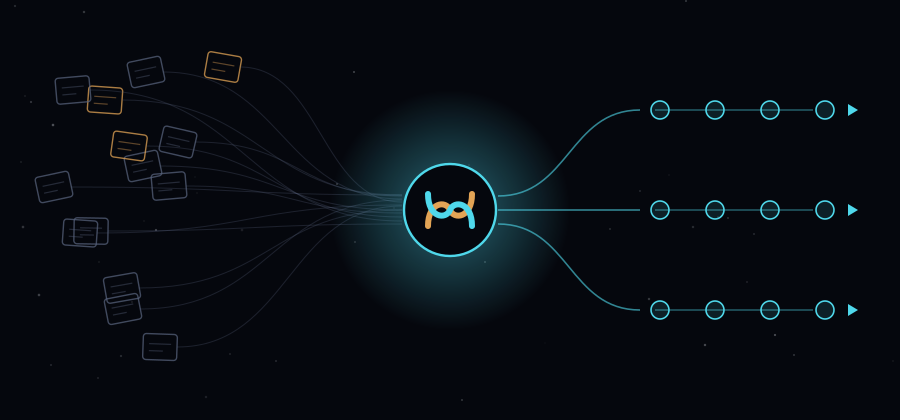
Every market organisation maintains its own Excel lists. Changes take weeks, and nobody knows which version is correct.
One golden record in Pimcore: maintained once, delivered everywhere. Shop, print and marketplaces get the same state.
Time-to-market: from weeks to days
Images sit on network drives and in inboxes. Finding the right shot often takes longer than the shoot itself.
AI tagging and semantic search across all assets: hits in seconds, formats and rights always consistent.
Search time: from minutes to seconds
Projects as a big bang: months of delivery, the result only becomes visible right at the end.
Stages with AI-accelerated delivery: first results within days, every line goes through review.
Delivery time: up to 90 % shorter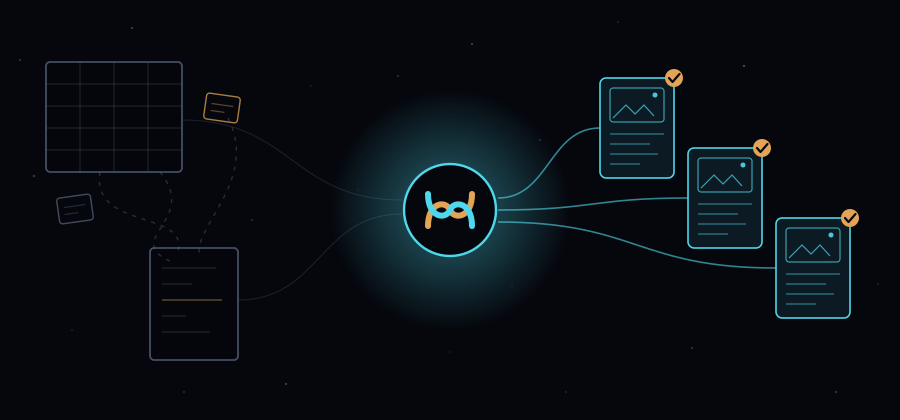
Catalogue production means copy-paste: prices and copy move from Excel to InDesign by hand and are already outdated by the time of printing.
Database publishing straight from Pimcore: price lists, data sheets and catalogues are generated from the golden record at the press of a button, always up to date.
Catalogue production: from months to weeks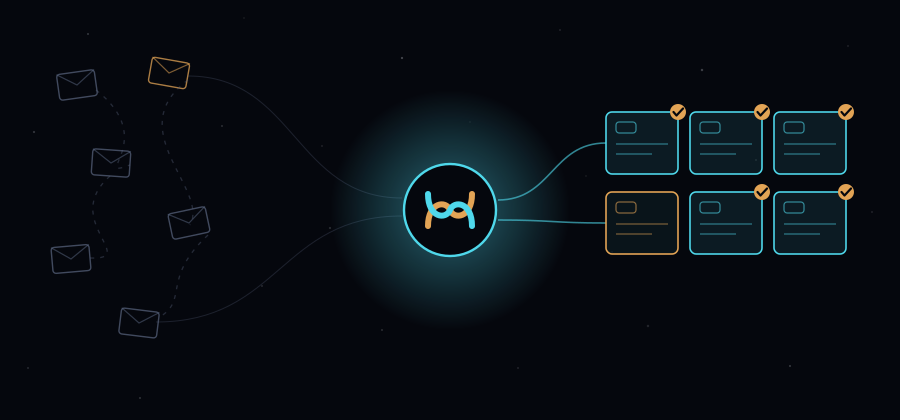
Translations run via email to agencies. Nobody knows which language version is current, and every market waits for a different state.
Localisation workflows in Pimcore with AI pre-translation: all languages in one place, review directly in the system, terminology stays consistent.
Localising new products: from weeks to days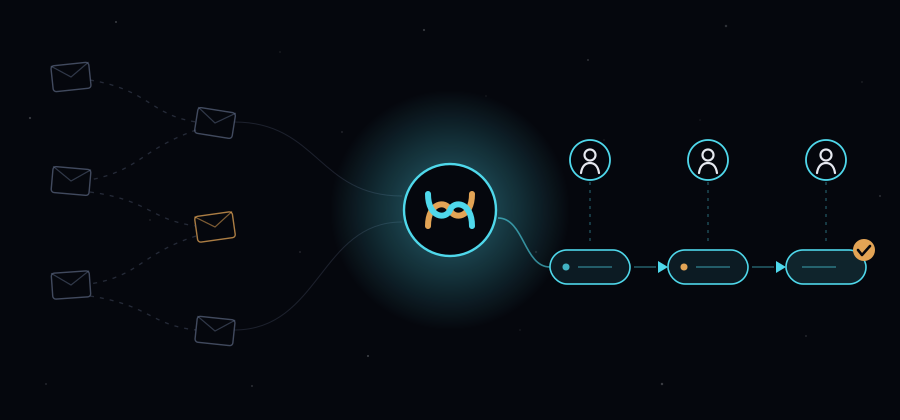
Approvals run via email ping-pong. Whose turn it is isn't tracked in any system, and products sit in inboxes for days.
Workflows with roles and statuses in Pimcore: everyone sees what's waiting for them, and every approval is documented and traceable.
Approval time: from days to hours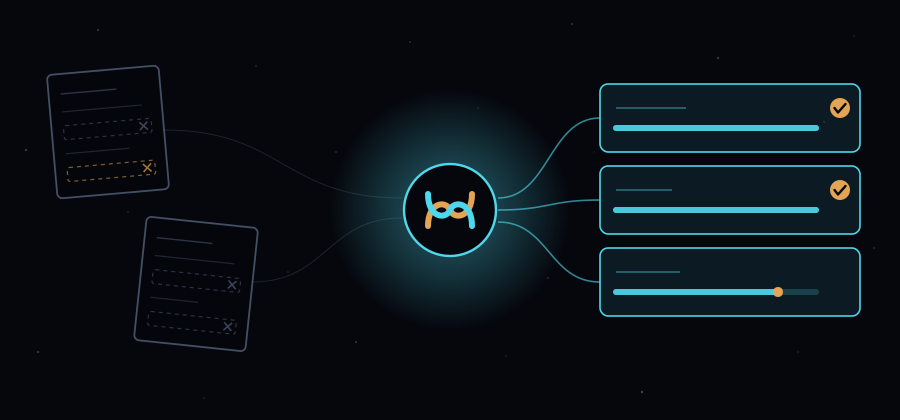
Whether a product is ready for the shop only becomes clear when the marketplace rejects it. Missing mandatory fields go unnoticed.
Completeness scores and validation rules per channel: gaps are visible immediately, and only data that meets the requirements gets released.
Channel rejects: close to zero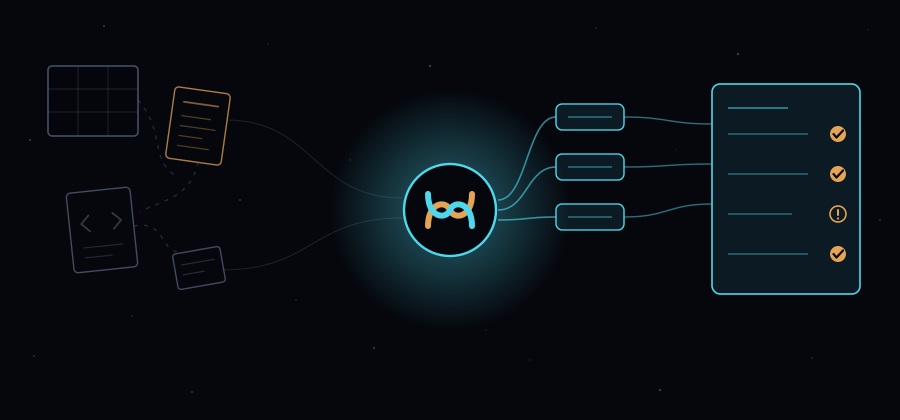
Every supplier delivers differently: sometimes Excel, sometimes PDF, sometimes XML. Every delivery means days of manual mapping and retyping.
AI-assisted mapping against the Pimcore data model: deliveries are matched and validated automatically, only conflicts are queued for review.
Product setup: from days to hours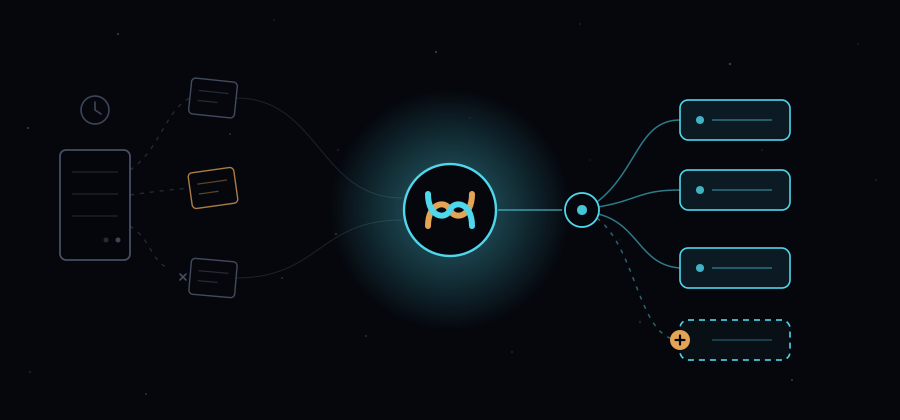
Every channel hangs off its own export script. A new marketplace means a new project, and fragile CSV jobs run overnight.
Datahub with GraphQL: every channel pulls exactly the data it needs, in real time instead of nightly exports. New channels dock on without touching what exists.
New channel live: in days instead of months
The team writes product copy from scratch for every channel. With thousands of articles, most product pages stay half empty.
AI generates copy variants from structured product data, per channel and tone of voice. The team reviews and approves instead of starting from zero.
Copywriting: up to 80 % faster05 Services — Logbook
Discovery workshops, analysis of the system landscape, design of the data model and target architecture. The result is a concept that gets built, not one that ends up in a drawer. AI delivers first data-model drafts in days instead of weeks, sharpened together in the workshop.
Clean delivery on a Symfony basis: Data Objects, Object Bricks, workflows, perspectives. Test-driven and with CI/CD, so the next team is happy to take over the code too. Routine code is written in AI pair programming, every line goes through review.
SAP, ERP, CRM, Excel, CSV or XML: data from any source is connected, cleansed and migrated. Via Datahub, REST or GraphQL it flows to where it is needed. AI generates mapping suggestions and migration scripts, verified against real data.
AI-assisted data enrichment, product copy in your brand voice, image tagging in the DAM and assistants on your product knowledge. Pragmatically integrated and measured by value.
Scaling, performance and security for the real world. Docker and Kubernetes deployments and architectures that stay calm even with millions of records. AI runs through variants and benchmarks, the architecture decision stays with a human.
After launch the work continues: monitoring, upgrades to new Pimcore versions and reliable response times. Your platform grows with the business. Log analysis and upgrade preparation run AI-assisted, which keeps response times short.
06 Getting started
Your existing installation under review: data model, performance, code quality, upgradeability, security. You receive a prioritised action list. Five days are enough because AI speeds up the analysis of code and data model.
Request audit →Workshops with your business teams, a first data model and a solid roadmap with effort indication. The decision basis for your Pimcore project. Two weeks are enough because system analysis and model drafts run AI-assisted.
Request sprint →Data quality check, mapping concept and a risk-rated migration plan, ready before the first line is migrated. The data quality check runs AI-accelerated, the assessment is done by hand.
Request assessment →07 Pimcore Upgrade
Many installations still run on Pimcore 6.9, 10 or 11 and no longer receive security updates. The path to Pimcore 2026 is more predictable than it looks: first the assessment, then a risk-rated roadmap, then migration in stages. AI accelerates the code changes, every line goes through review.
08 Method: „The common thread“
Workshops with the people who work with your systems and data every day. The result is a shared target picture and clear priorities.
Information architecture, data model, roles and processes are designed and validated with real data.
Target architecture, infrastructure setup and an early prototype with your data. Risks are defused before they get expensive.
Iterative development in sprints: data model, imports, integrations, front-ends, each with tests and reviews. AI accelerates routine code and test coverage, reviews stay hands-on.
Launch, monitoring, editorial training and a roadmap for expansion. The platform grows in step with your business.
09 References
Anonymised. Happy to share the details in person.
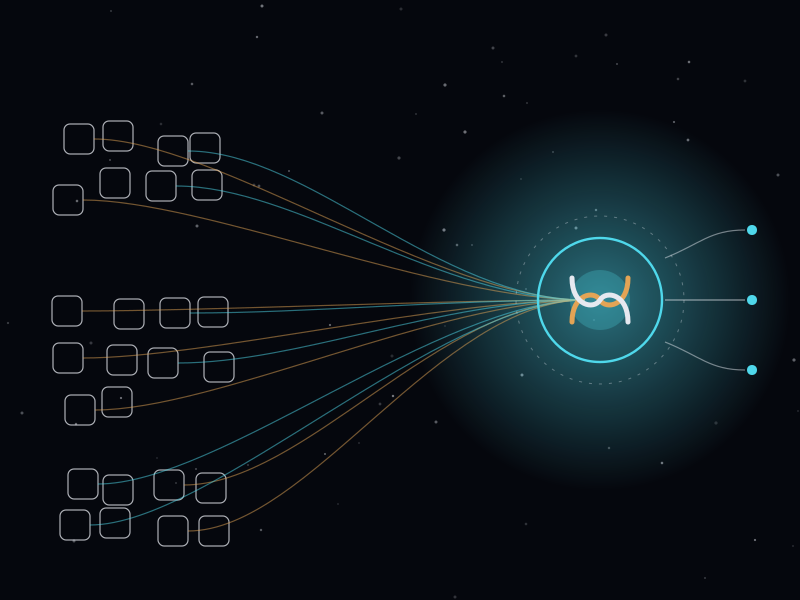
Starting point: Product data in Excel silos. Every market organisation maintained its own variants, errors included.
Impact: Time-to-market per product reduced from weeks to days, one data source for all channels.
Starting point: Shop and PIM ran separately. Duplicate maintenance and nightly sync jobs were permanent construction sites.
Impact: Duplicate maintenance eliminated, range extensions possible without an IT ticket.

Starting point: Assets were scattered across network drives and cloud folders. Search often took longer than the shoot.
Impact: Assets findable in seconds, consistent formats in every channel.
Starting point: After several acquisitions, five brands maintained their master data in separate ERP and CRM systems. Customers and suppliers existed multiple times, reports contradicted each other.
Impact: One reliable master data foundation for group reporting and all integrations, duplicates significantly reduced.

Starting point: The ESPR regulation requires product passports, but the necessary data was spread across a legacy PIM, Excel and supplier portals.
Impact: Product passports retrievable per component, new regulatory requirements can be met without a system change.
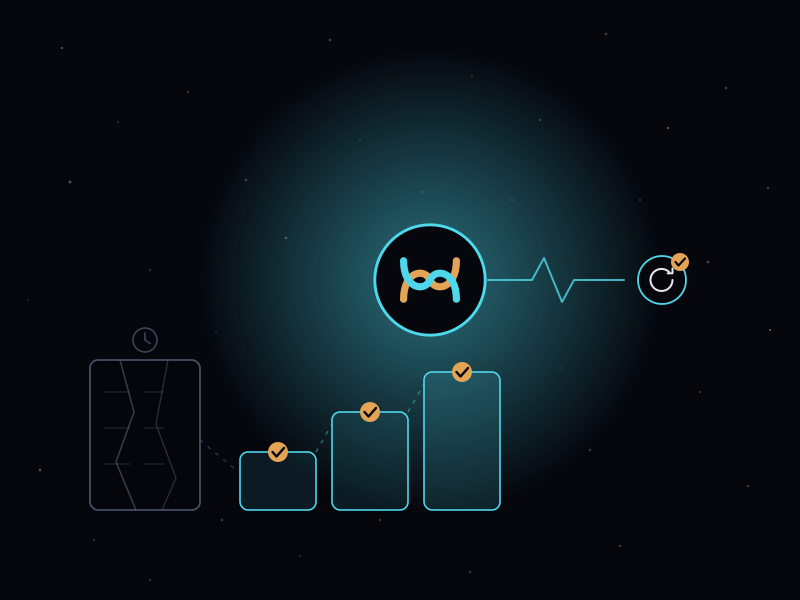
Starting point: A Pimcore installation that had grown over years no longer received security updates; an upgrade was considered too risky internally.
Impact: Migrated to Pimcore 2026 in controlled stages, data model cleaned up, operations continued without interruption.

Starting point: Print catalogues were maintained manually in InDesign. Every range or price change cost weeks of correction loops.
Impact: Catalogues are generated from the PIM data, consistent with web and shop, sources of error eliminated.
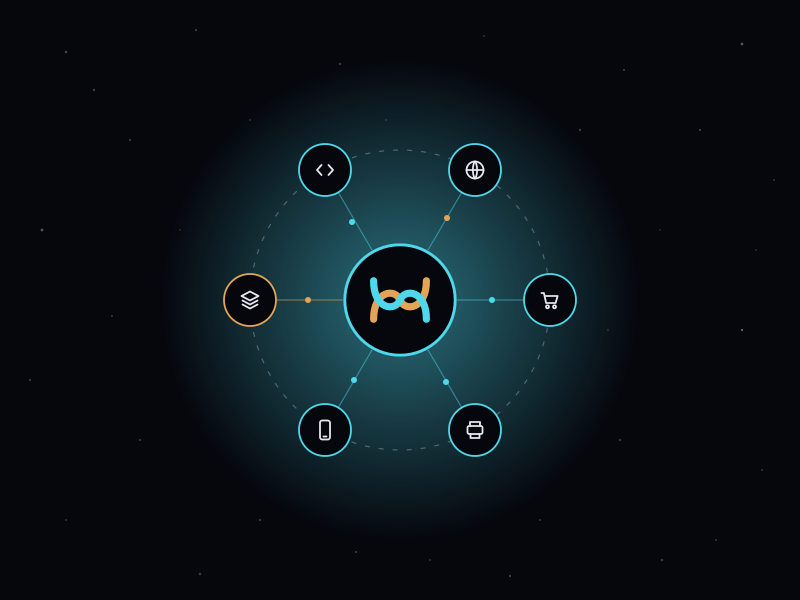
Starting point: Product data sat in a legacy system; shop, app and other systems were supplied separately and interfaces were fragile.
Impact: Pimcore connected centrally via APIs; shop, app and ERP draw consistent data in real time.
10 Contact
Tell us about your project. The founder answers personally.
Start a project11 FAQ
Pimcore is an open-source data platform that unites PIM, MDM, DAM, CDP, CMS/DXP and digital commerce in one system. Companies use it as the central source for product, master, asset and customer data, feeding every channel consistently: shop, print, marketplaces and apps.
No. Pimcore complements the system landscape as the central data hub: the ERP stays in charge of orders and accounting, while Pimcore consolidates product, master and asset data and feeds shop, print and marketplaces consistently. The connection runs via Datahub, REST or GraphQL.
PIM manages product information for marketing and sales: attributes, copy, translations, media. MDM goes broader and consolidates the master data of all domains into a golden record, including customers and suppliers alongside products. Pimcore covers both in one platform.
Yes. SAP, ERP, CRM as well as Excel, CSV and XML sources are connected via interfaces; data is cleansed, mapped and kept in sync. AI-assisted mapping speeds up the integration considerably.
Very well: any number of languages and market variants, localisation workflows with in-system review and AI pre-translation. All language versions live in one place and terminology stays consistent.
Yes, database publishing: price lists, data sheets and catalogues are generated directly from the golden record, consistent with web and shop and always up to date.
For larger projects that need several enterprise features, the Enterprise Edition is recommended. Otherwise the Community Edition is sufficient in most cases. Which features are actually needed becomes clear during discovery.
Wherever several channels, markets or systems rely on the same data, from mid-sized companies to large enterprises. The focus is on manufacturing, retail and B2B, brand manufacturers and multi-brand groups. Reference projects range from a few thousand objects to 120,000 articles across 14 markets.
Yes, gladly on request. A digital product passport for 60,000 components has already been implemented on a Pimcore basis. New regulatory requirements can be covered there without switching systems.
With one of the three entry formats: a 5-day Pimcore audit for existing installations, a 2-week discovery sprint for new projects, or a 1-week migration assessment before any data migration. For an initial assessment, a brief picture of the starting point is enough: systems in use, scope, goals. Detailed requirements are worked out in workshops if needed. Enquiries go through the contact form, and the founder answers personally.
That depends on the scope and size of the project. Clearly defined entry formats make the start predictable: a 5-day audit, a 2-week discovery sprint or a 1-week migration assessment. After the discovery sprint you receive a solid effort indication for the implementation.
No big bang: after the discovery sprint, delivery happens in stages and first results are visible early. The overall duration depends on data quality and integration scope; the roadmap from the sprint makes it predictable.
In clear steps: data quality analysis, a mapping concept against the target data model, test migrations with real data, then the productive migration in stages with delta runs. AI proposes the mapping and recognises patterns in inconsistent sources, from Excel to XML. Only conflicts are escalated to a human for review.
Yes, both: embedded in the teams of agencies, implementation partners or internal IT, or working as an independent delivery partner. Knowledge transfer is part of it, so the team can take over the platform.
Yes. Operations, support and further development of existing installations are part of the offering, regardless of who originally built them. The 5-day audit is a good starting point.
Intertwinet does not offer hosting itself, but advises on the right setup and gladly recommends experienced hosting partners. Docker- and Kubernetes-based deployments are part of the service portfolio.
Yes, as workshops, videos or documentation, depending on requirements. Training the editorial team is part of the operations phase, so the platform is actually used in daily work.
Intertwinet Solutions LLP is a Canadian LLP with its registered office in Richmond, BC. Collaboration is mainly remote, in German or English, primarily with clients in the DACH region. On-site sessions such as workshops are possible by arrangement.
Yes. Pimcore 6.9 and 10 have not received security updates since 2023, Pimcore 11 since 2025. Pimcore 12 is currently maintained; the target version is Pimcore 2026. The move is more predictable than often feared: assessment first, then a risk-rated roadmap, then a staged migration.
After the one-week migration assessment you have a risk-rated roadmap. The migration itself runs in controlled stages over several weeks; the platform stays in operation throughout. AI-accelerated code adaptation shortens delivery by up to 90 percent.
On two levels. AI as the way of working in every project: analysis, code, mapping and migration run up to 90 percent faster with it. And AI as part of the solution: automated data enrichment, product copy in brand voice, image tagging in the DAM, AI pre-translation and assistants on your own product knowledge.
No. AI takes over routine work: boilerplate, mapping suggestions, test cases, analysis of large codebases. That shortens delivery by up to 90 percent. Concept, architecture decisions and sign-off stay with people (human in the loop).
Through automated quality assurance: tools and audits check the code continuously, complemented by tests from unit to integration level in the CI/CD pipeline. Every feature is reviewed and signed off before going live.
Yes. From structured product data, AI generates copy variants per channel and tone of voice, in your brand language. The team reviews and approves instead of starting from scratch. With thousands of articles that is up to 80 percent faster.
Good enough to cut search time from minutes to seconds: motifs, colours and content are tagged automatically, and semantic search works even without exact keywords. Taxonomy and quality rules are configured per project.
An assistant that answers questions directly from your own structured data, meaning product data, documents and specifications from Pimcore, instead of a language model's general knowledge. The answers are verifiable and up to date (retrieval-augmented generation).
Yes. Enrichment, tagging, copy generation or a product knowledge assistant can be integrated into existing installations. A single, measurable use case is often the best first step.
Yes. Even with a few thousand articles, automated enrichment, translation and copywriting save most of the manual maintenance. Whether a use case is worthwhile shows in the concrete benefit.
Yes. Which models and which setup are used is defined per project, from API providers with contractual data protection commitments to self-hosted models. Product data does not flow into the training of public models.
Claude by Anthropic is preferred, for development, analysis and text tasks. Depending on the task, data protection requirements and cost, other models are used as well, such as Gemini by Google or locally hosted models. The architecture stays interchangeable, with no vendor lock-in.